
A marble mandir is the heart of many Indian homes, and it is one of the most rewarding pieces to make in marble because it combines devotion with craft. A well-designed marble mandir feels permanent and calm, keeps clean easily, and, with a little inlay work, becomes a genuine heirloom. This guide covers the main types of marble mandir design, ideas from simple to grand, where to place one, how to keep it clean, and how inlay lifts a plain mandir into something bespoke.
About marble mandirs for the home
Marble is the traditional material for a home temple for good reason: it is solid and lasting, it does not warp, crack in the heat, or attract insects the way wood can, it stays cool, and it wipes clean. White Makrana marble is the usual choice for its bright, pure tone, the same marble used in India's great monuments. A marble mandir can be a small wall-mounted shrine for a flat or a full floor-standing temple with a domed shikhar top, steps, and pillars for a dedicated pooja room.
Types of marble mandir design
Marble mandir designs fall into a few broad types, and the right one depends mainly on your space:
- Table-top and shelf mandirs — compact shrines that sit on a pooja shelf or counter, ideal for apartments.
- Wall-mounted mandirs — a marble mandir design in the wall or fixed to it, saving floor space while giving a proper backdrop.
- Floor-standing home mandirs — free-standing temples with a base, pillars, and a domed top for a pooja room.
- Temple-style mandirs — large, architectural pieces with multiple domes and carving for big homes, community halls, and temples.

Simple marble mandir designs
A simple marble mandir design is often the most tasteful: clean lines, a plain domed top, two slim pillars, and a single inlaid border or a small floral motif on the back panel. Simple designs suit modern interiors, cost less than heavily carved temples, and keep the focus on the deities. For many homes, a simple white marble mandir with one delicate inlaid border strikes the right balance between devotion and decoration.
Wall-mounted marble mandir designs
Where floor space is tight, a wall-mounted marble mandir gives the presence of a temple without taking up the room. These pair well with a marble back panel behind them, which protects the wall from lamp smoke and gives an inlaid backdrop. A wall mandir with a slim canopy and an inlaid lotus panel is a popular design for apartments.
Large and temple-style designs
For a dedicated pooja room or a large home, a floor-standing mandir with a domed shikhar, carved pillars, steps, and an inlaid floor around it becomes a room within a room. These are architectural pieces, and this is where marble truly earns its place, carrying carving and inlay that no other material can. A large mandir can be paired with an inlaid marble floor to complete the setting.
Adding inlay and semi-precious stone
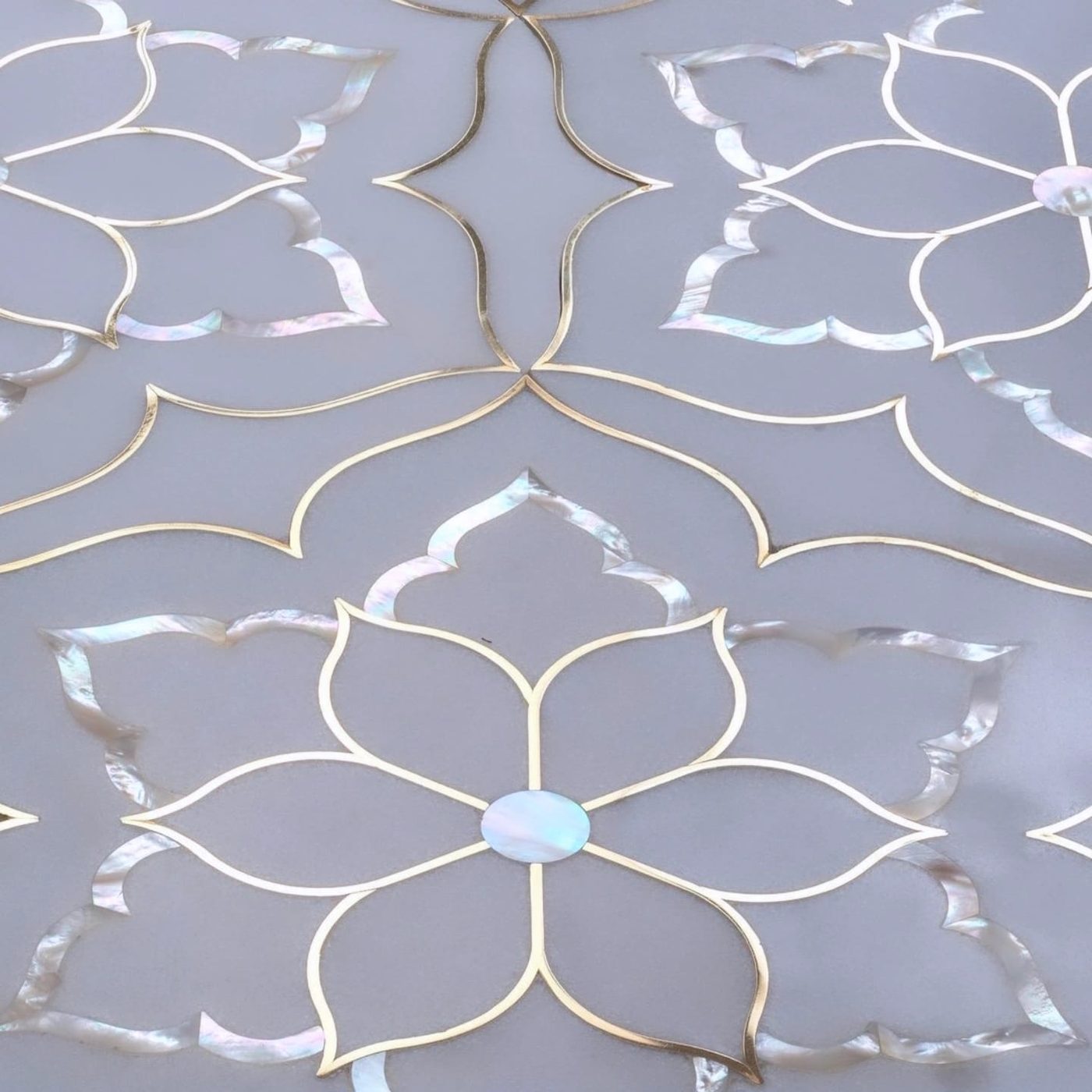
Inlay is what turns a standard marble mandir into a bespoke one. The most popular additions are an inlaid border framing the mandir, a lotus or floral back panel in semi-precious stones, and fine brass line inlay picking out the arches and dome. This is the same pietra dura craft we use for wall panels, applied at the scale of a home temple. Because the colour comes from natural stone, an inlaid mandir keeps its richness for generations.

Placement and vastu
By tradition, the mandir is placed in the north-east (ishaan) corner of the home, the direction associated with clarity and calm. Deities are usually positioned so they face west and the worshipper faces east while praying. Keep the mandir off the floor of a bedroom, away from bathrooms, and on a clean, quiet wall. These are guidelines rather than rules, and we can design a mandir to suit whatever placement your home allows.
How to clean and care for a marble mandir
Dust the mandir daily with a soft, dry cloth. Once in a while, wipe it with a barely damp cloth and a pH-neutral cleaner, then dry it, so no water sits in the carving. Keep oil lamps, ghee, and kumkum from resting directly on the marble, as they are the most common cause of stains, and wipe spills quickly. Avoid acidic cleaners and scouring powders, which dull the polish. For stubborn marks and how to restore shine, see our marble care guide.
How much does a marble mandir cost?
A marble mandir is quoted on its size, the grade of marble, and the amount of carving and inlay. A compact, simple design is modest; a large temple-style mandir with domes, pillars, and semi-precious stone inlay is a major piece. Inlay work, not size alone, is the main driver of the price. Send your available space and a design idea for a firm quote; for how inlay is priced in general, see our cost guide.
Commission a marble mandir
We design and handcraft marble mandirs to order in Udaipur, the home of the inlay craft, and deliver across India and worldwide, crated and insured. Whether you want a simple wall shrine or a full inlaid temple, we draw it to scale for your space and take your approval before any stone is cut. See our marble inlay work or tell us your idea.
Frequently asked questions
Which mandir is better for the home, wooden or marble?
Marble lasts far longer than wood, does not warp or attract insects, stays cool, and is easy to keep clean, which is why it is the traditional choice for a permanent home temple. Wood is lighter and cheaper but needs more care over time.
Where should a marble mandir be placed in the house?
By tradition the mandir is placed in the north-east of the home, with the deities facing west so the worshipper faces east. A dedicated pooja room is ideal; otherwise a clean, quiet wall away from bedrooms and bathrooms is preferred.
How do I clean a marble mandir?
Dust daily with a soft dry cloth, wipe with a barely damp cloth and a pH-neutral cleaner, and dry it. Avoid acidic cleaners, and keep oil lamps and kumkum from sitting on the marble, as they can stain. See our care guide for removing stains.
How much does a simple marble mandir cost?
A simple home marble mandir is quoted on its size, the marble, and the amount of carving or inlay. A plain design is modest; inlay borders and semi-precious stone raise the price. Send your size and a design idea for a firm quote.
What size marble mandir suits a home?
For a flat, a compact wall-mounted or table-top mandir suits a pooja shelf; for a house, a floor-standing mandir with a domed top and steps suits a dedicated pooja room. We make each to your available space.
Can I add inlay work to a marble mandir?
Yes. Inlaid borders, a lotus or floral back panel, and semi-precious stone detailing are the most popular way to lift a plain marble mandir into a bespoke piece, using the same craft as our wall panels.

Bring your idea to life.
Tell us your space, design, and size. We will plan it with you and make it by hand.
Enquire now